 Lucerna Inventi
The merciful doctrine of purification after death.
A candlelit guide to what the Church teaches, how Scripture and Tradition bear witness, and how the living can aid the holy souls by prayer, sacrifice, Masses, and works of mercy.
Domenico di Michelino, Dante, Florence and the Divine Comedy (1465), Santa Maria del Fiore, Florence
Move from doctrine to Scripture, from the witness of the Fathers to practical charity for the faithful departed.
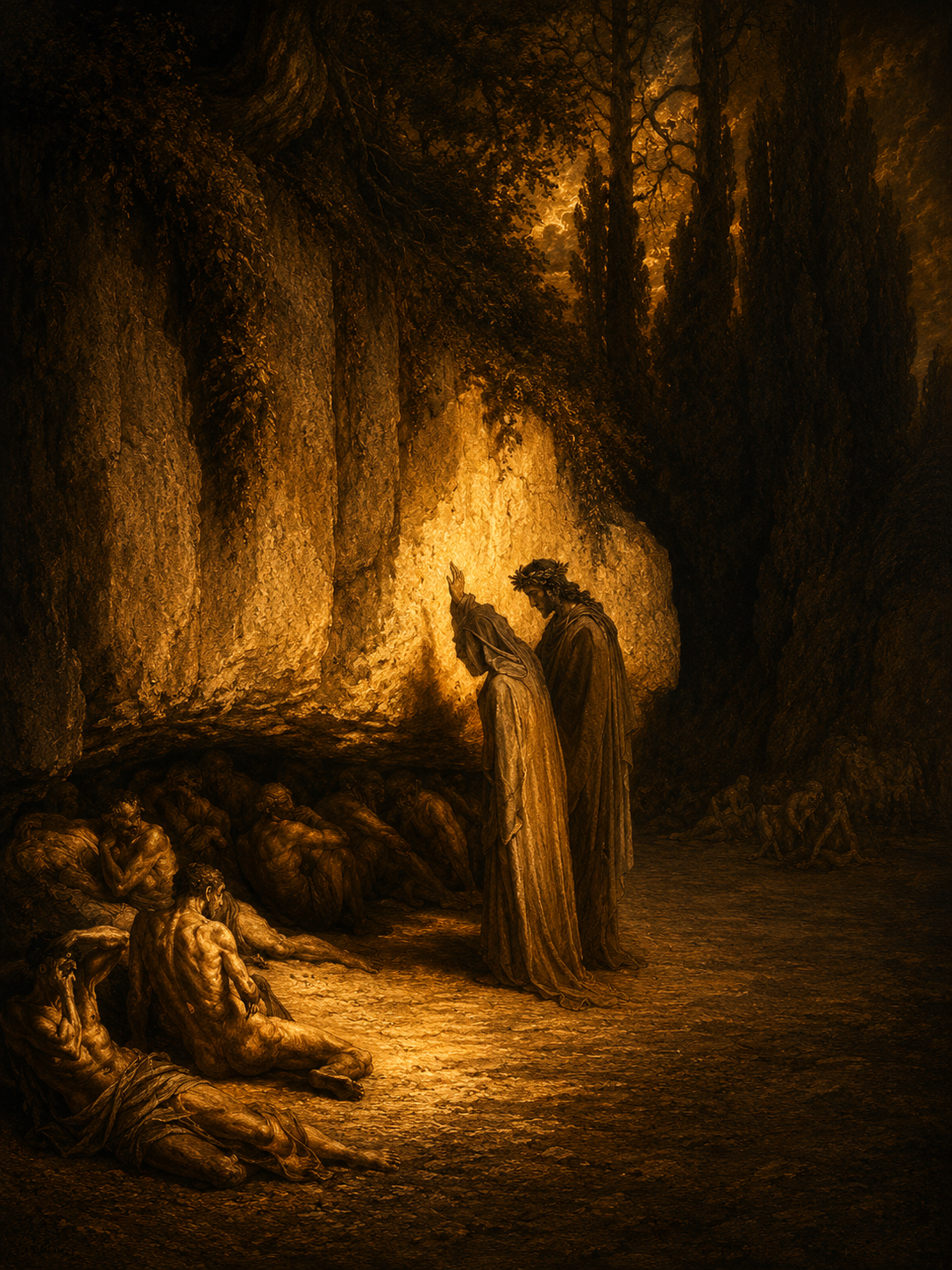
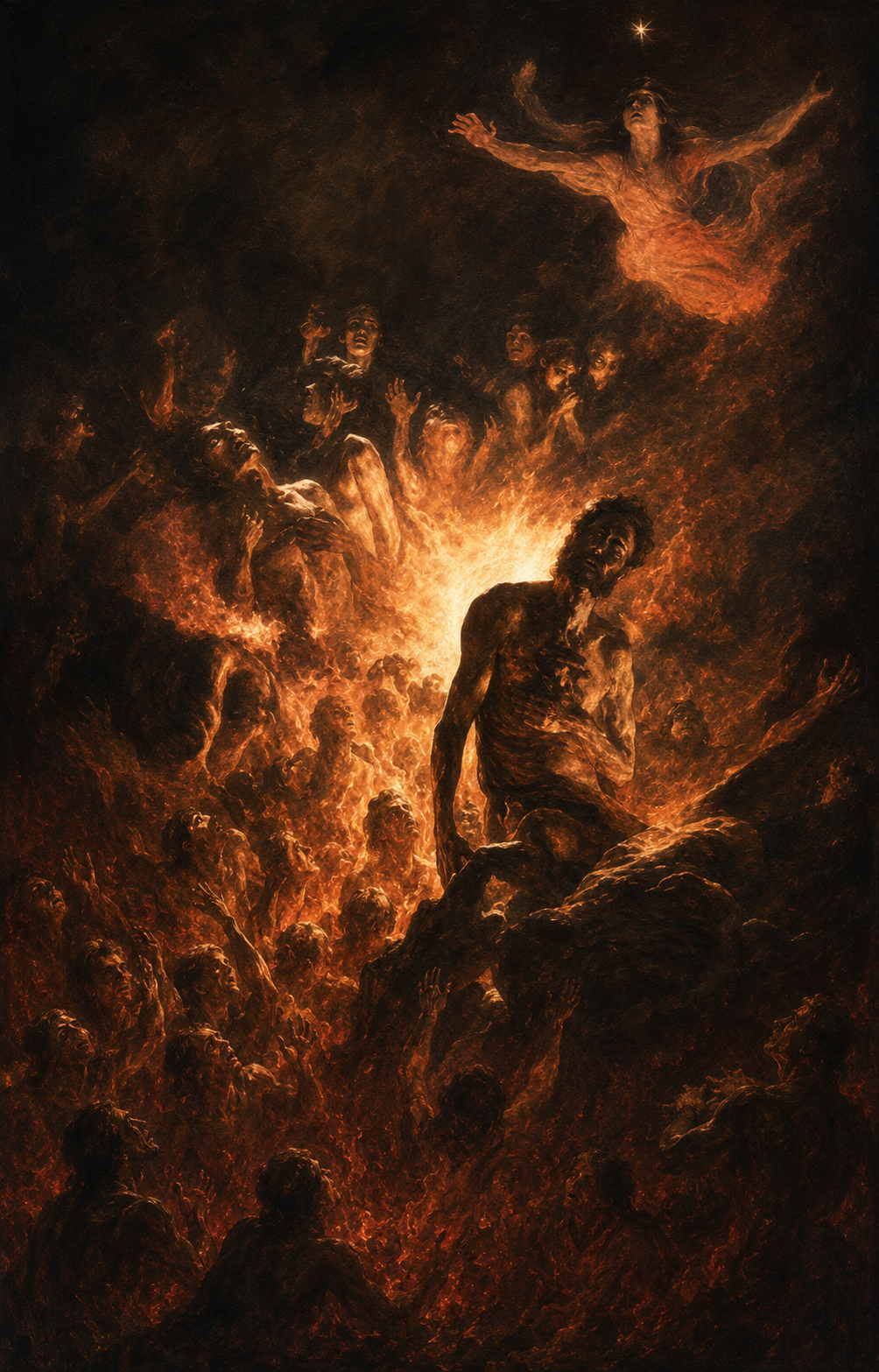
Purgatory is the state of purification after death in which those who die in the grace and friendship of God, but who are not yet wholly free from the stain of venial sin or the temporal punishment due to sins already forgiven, are cleansed so as to achieve the holiness necessary to enter the joy of Heaven.
It is important to understand what Purgatory is not. It is not a "second chance" for repentance. Those who enter Purgatory are already saved — they have died in the state of grace and their eternal destiny is assured. They will reach Heaven. Purgatory is not a middle state between salvation and damnation, but the final preparation of the saved. Those who die in mortal sin descend immediately to Hell; there is no passage from Hell to Purgatory or from Purgatory to Hell.
To understand why Purgatory exists, one must understand the distinction between the eternal punishment and the temporal punishment due to sin. When a mortal sin is forgiven through the Sacrament of Penance, the eternal punishment — Hell — is remitted. But there often remains a temporal punishment: a debt of justice, a disordered attachment, a lingering imperfection that must still be satisfied or purged. An analogy drawn from ordinary life: a child who breaks a window and is forgiven by his father is still expected to pay for the glass. The guilt is removed; the consequence remains.
Moreover, venial sins — those lesser faults which do not destroy the life of grace in the soul but weaken it — may not all be repented of before death. The soul that departs this life with venial sin still clinging to it cannot enter immediately into the presence of God, for "there shall not enter into it any thing defiled" (Apocalypse 21:27). The fire of Purgatory cleanses what remains, so that the soul may stand before God in perfect holiness.
The Church's teaching on Purgatory is, above all, a doctrine of mercy. It tells us that God, in His infinite love, does not reject the imperfect soul that dies in His friendship but provides a means by which every remaining stain is removed. It also tells us that the living can help the dead — that the bond of charity stretches beyond the grave and that our prayers, sacrifices, and Masses offered for the faithful departed are truly efficacious. For a fuller treatment of the soul's journey after death, see The Last Things →
The doctrine of Purgatory, though defined with full clarity only by the Magisterium of the Church, finds its roots in Sacred Scripture. Three passages in particular have been invoked from the earliest centuries as witnesses to a purification after death. All quotations here follow the Douay-Rheims translation.
"And making a gathering, he sent twelve thousand drachms of silver to Jerusalem for sacrifice to be offered for the sins of the dead, thinking well and religiously concerning the resurrection. (For if he had not hoped that they that were slain should rise again, it would have seemed superfluous and vain to pray for the dead.) And because he considered that they who had fallen asleep with godliness, had great grace laid up for them. It is therefore a holy and wholesome thought to pray for the dead, that they may be loosed from sins."
This is the most explicit scriptural testimony to prayer for the dead. Judas Maccabeus, the great Jewish warrior, arranged for an expiatory sacrifice to be offered in Jerusalem on behalf of his fallen soldiers, that they might be freed from the sin discovered upon them. The sacred author commends this act and declares it "a holy and wholesome thought to pray for the dead, that they may be loosed from sins."
If the dead were already in Heaven, they would have no need of prayers. If they were in Hell, no prayer could avail them. That Judas prays for them — and that Scripture commends the act — implies a third state: one in which the dead, though saved, can still be aided by the suffrages of the living. The Church has always understood this passage as pointing directly to Purgatory.
Note: 2 Maccabees is part of the deuterocanonical books, received as inspired Scripture by the Catholic Church. The Council of Trent solemnly defined the canon of Scripture including 2 Maccabees.
"For other foundation no man can lay, but that which is laid; which is Christ Jesus. Now if any man build upon this foundation, gold, silver, precious stones, wood, hay, stubble: Every man's work shall be manifest; for the day of the Lord shall declare it, because it shall be revealed in fire; and the fire shall try every man's work, of what sort it is. If any man's work abide, which he hath built thereupon, he shall receive a reward. If any man's work burn, he shall suffer loss; but he himself shall be saved, yet so as by fire."
St. Paul teaches that a man may build upon the foundation of Christ with works of varying quality — gold and silver, or wood and stubble. On the day of judgement, fire will test these works. The man whose works are burned up "shall suffer loss; but he himself shall be saved, yet so as by fire."
The Fathers of the Church saw in this passage a clear reference to a purifying fire after death. St. Augustine wrote that the expression "saved, yet so as by fire" could not refer to the fire of Hell (from which no one is saved) nor to any merely earthly trial, but to a purgatorial fire through which those who built poorly upon the foundation of Christ are cleansed before entering into glory. St. Gregory the Great likewise interprets this fire as the purification of Purgatory.
"And whosoever shall speak a word against the Son of man, it shall be forgiven him: but he that shall speak against the Holy Ghost, it shall not be forgiven him, neither in this world, nor in the world to come."
Our Lord declares that the sin against the Holy Ghost shall not be forgiven "neither in this world, nor in the world to come." The implication — recognised by St. Augustine, St. Gregory the Great, and many others — is that certain sins can be forgiven in the world to come. If no forgiveness were possible after death, the qualification "nor in the world to come" would be meaningless. This passage therefore implies a state after death in which some remission of sin is possible — precisely what the Church teaches concerning Purgatory.
Additional Scripture
"Amen I say to thee, thou shalt not go out from thence till thou repay the last farthing." — S. Matthew 5:26
"There shall not enter into it any thing defiled, or that worketh abomination or maketh a lie." — Apocalypse 21:27
"For gold and silver are tried in the fire, but acceptable men in the furnace of humiliation." — Ecclesiasticus 2:5
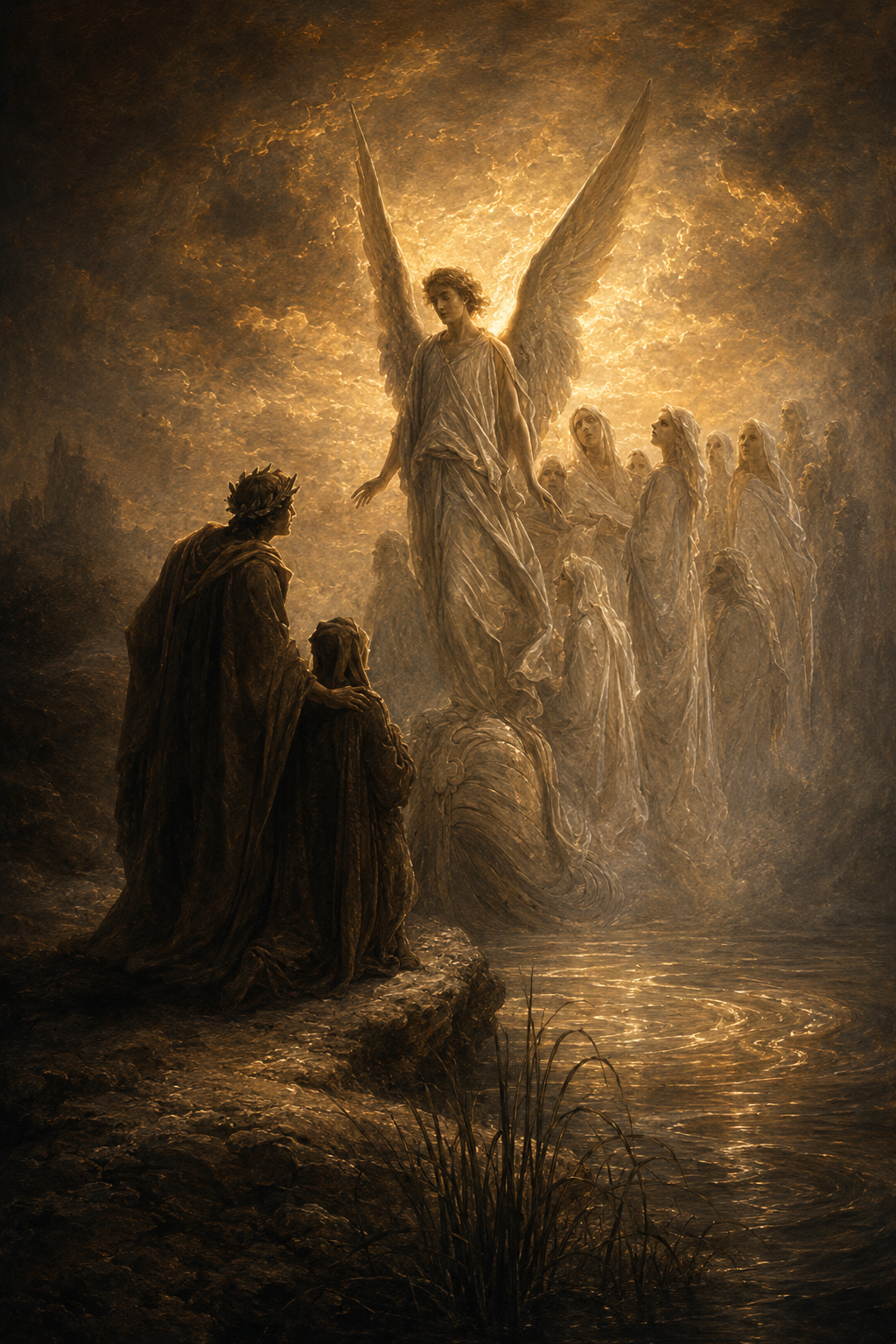
The doctrine of Purgatory was not invented in the Middle Ages. From the earliest days of the Church, Christians prayed for the dead — in the liturgy, at the tombs of the martyrs, and in their private devotions. The Fathers of the Church bear witness to this ancient and universal practice, and many of them explicitly teach the existence of a purification after death.
Tertullian (c. 160–220)
Among the earliest Latin writers to attest to prayer for the dead, Tertullian describes the offering of prayers and the Holy Sacrifice on the anniversary of a spouse's death as an established custom. In De Monogamia (c. 213), he speaks of a widow who prays for the soul of her deceased husband and offers the Sacrifice on the anniversary of his falling asleep. In De Corona, he lists "oblations for the dead" among the Traditions received from the Apostles.
St. Cyril of Jerusalem (c. 313–386)
In his Catechetical Lectures (Lecture XXIII, Mystagogic V), St. Cyril teaches that the souls of the departed receive "the greatest help" when prayers and the Holy Sacrifice are offered for them during the liturgy: "We offer Christ, sacrificed for our sins, propitiating our merciful God for them as well as for ourselves."
St. Augustine (354–430)
The great Doctor of Grace devotes extensive attention to the state of the dead. In the Enchiridion (ch. 69), he writes that prayers and the Sacrifice of the altar and almsgiving offered for the baptised dead profit those who, in their lifetimes, merited that such things might profit them. In the City of God (Book XXI, ch. 24), he interprets 1 Corinthians 3:15 ("saved, yet so as by fire") as referring to a purifying fire after death. In his Confessions (Book IX), he movingly prays for the soul of his mother Monica, asking God to forgive whatever sins she may have contracted in this life.
St. Gregory the Great (c. 540–604)
Pope St. Gregory the Great, in his Dialogues (Book IV), relates numerous accounts of souls appearing to request Masses and prayers. He teaches clearly that there is a purgatorial fire for minor faults after death: "It must be believed that there is a purgatorial fire before the judgement for certain light faults." He also teaches that the Holy Sacrifice of the Mass is the most powerful means of delivering souls from Purgatory.
St. John Chrysostom (c. 347–407)
The great preacher of Antioch and Constantinople urged the faithful to offer alms, prayers, and above all the Holy Sacrifice for the dead. In his Homilies on 1 Corinthians (Homily XLI), he speaks of the power of the Eucharistic offering to aid the departed: "Let us not hesitate to help those who have departed and to offer our prayers for them."
The Inscriptions of the Catacombs
Among the earliest archaeological evidences of the Christian faith are the inscriptions found in the Roman catacombs, dating from the second and third centuries. Many of these bear prayers for the peace and refreshment of the departed: "May God refresh thy soul," "May you live in peace," "May you live among the saints." These short formulae testify to the universal and spontaneous belief of the early Church that the living could aid the dead by prayer — a belief that only makes sense if the dead are in a state where such help avails them.
The doctrine of Purgatory belongs to the ordinary and universal Magisterium of the Church from the earliest centuries. It was solemnly defined at three ecumenical councils, each addressing the question in the context of reunification with the Eastern churches or in response to the errors of the Protestant Reformers.
The Second Council of Lyons, the fourteenth ecumenical council, addressed the doctrine of Purgatory in the Profession of Faith of Emperor Michael VIII Palaeologus, drawn up as part of the attempted reunion with the Greek Church. The profession states:
"If those who are truly penitent die in charity before they have done sufficient penance for their sins of commission and omission, their souls are purified after death by purgatorial or cleansing punishments. The suffrages of the living faithful — namely, the Sacrifice of the Mass, prayers, almsgiving, and other works of piety — are of benefit to them for the relief of such punishments."
This is the first solemn conciliar definition affirming Purgatory by name, the nature of purgatorial cleansing, and the efficacy of the suffrages of the living.
The Council of Florence, the seventeenth ecumenical council, reiterated and expanded the teaching on Purgatory in the Decree for the Greeks (Laetentur Caeli), again in the context of reunion with the Eastern churches. The decree states:
"The souls of those who depart this life in the state of grace, but have not yet made full satisfaction for their transgressions, are purified after death by the pains of purgatory. The suffrages of the living faithful — namely, the Sacrifice of the Mass, prayers, almsgiving, and other works of piety — which the faithful are accustomed to offer for one another according to the practices of the Church, are of profit to them for the release of such pains."
Florence further specified the state of those who die in grace but without perfect satisfaction, and reaffirmed the utility of suffrages offered by the living.
The Council of Trent, summoned in response to the Protestant Reformation, issued a solemn Decree Concerning Purgatory at its twenty-fifth and final session in December 1563. Luther, Calvin, and the other Reformers had denied the existence of Purgatory and attacked the practice of offering Masses and prayers for the dead. The Council replied:
"The Catholic Church, instructed by the Holy Ghost, has, from the sacred Scriptures and the ancient tradition of the Fathers, taught, in sacred councils, and very recently in this ecumenical synod, that there is a Purgatory, and that the souls there detained are helped by the suffrages of the faithful, but principally by the acceptable sacrifice of the altar."
Trent also issued pastoral directives: bishops were to ensure that sound doctrine on Purgatory be taught and preached, that the more difficult and subtle questions not suited to popular instruction be excluded from ordinary preaching, and that superstitious practices and abuses connected with indulgences and Masses for the dead be corrected and abolished. Trent did not define the precise nature of the purgatorial fire or the manner of purification, leaving these as matters of legitimate theological discussion.
Trent's decree is the most authoritative definition, directly answering the Protestant denial and grounding the doctrine in Scripture, Tradition, and the prior councils.
The doctrine of Purgatory is inseparable from the mystery of the Communion of Saints — the spiritual union of all the members of Christ's Mystical Body, whether living on earth, suffering in Purgatory, or reigning in Heaven.
The Church has traditionally spoken of herself as existing in three states:
The Church Militant
The faithful on earth, who are still engaged in the warfare of this life against the world, the flesh, and the devil. They strive to grow in holiness, receive the Sacraments, and persevere in grace until death.
The Church Suffering
The holy souls in Purgatory, who have died in the state of grace but are undergoing purification. They are certain of their salvation and cannot sin, but they suffer the pains of purgation and long ardently for the vision of God. They cannot help themselves, but they can be helped by the prayers and good works of the living.
The Church Triumphant
The blessed in Heaven, who behold God face to face in the Beatific Vision. They intercede for the Church Militant on earth and, according to the common teaching, also for the souls in Purgatory. The saints in Heaven are not idle spectators; they are powerful intercessors whose prayers before the throne of God avail much.
These three states are not three separate churches but one Church in three conditions. The bond of charity unites them all. The faithful on earth can offer prayers, Masses, sacrifices, and indulgences for the souls in Purgatory. The saints in Heaven intercede for both the living and the dead. The souls in Purgatory, though unable to merit for themselves, are widely held to pray for those on earth who have aided them.
This mutual exchange of spiritual goods — prayers ascending, graces descending, charity circulating through all three states — is the very heart of the Communion of Saints. Purgatory is not a grim doctrine that stands alone; it is part of a mystery of love that binds the entire Body of Christ across the divide of death.
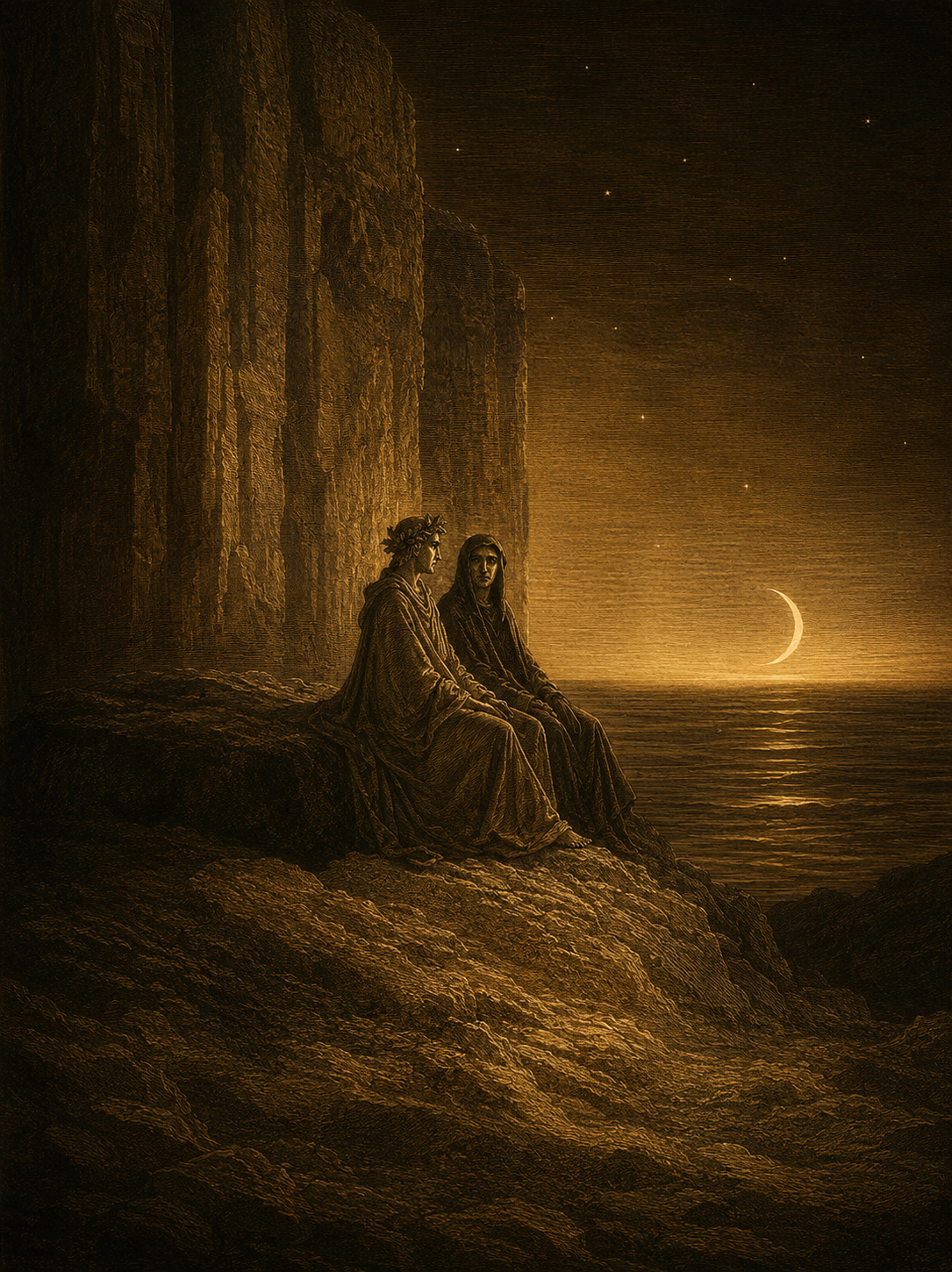
The Church has always taught that the living can aid the souls in Purgatory by their suffrages — that is, by prayers, good works, and sacrifices offered on their behalf. The three ecumenical councils that defined the doctrine all enumerate the same principal means: the Sacrifice of the Mass, prayer, almsgiving, and other works of piety.
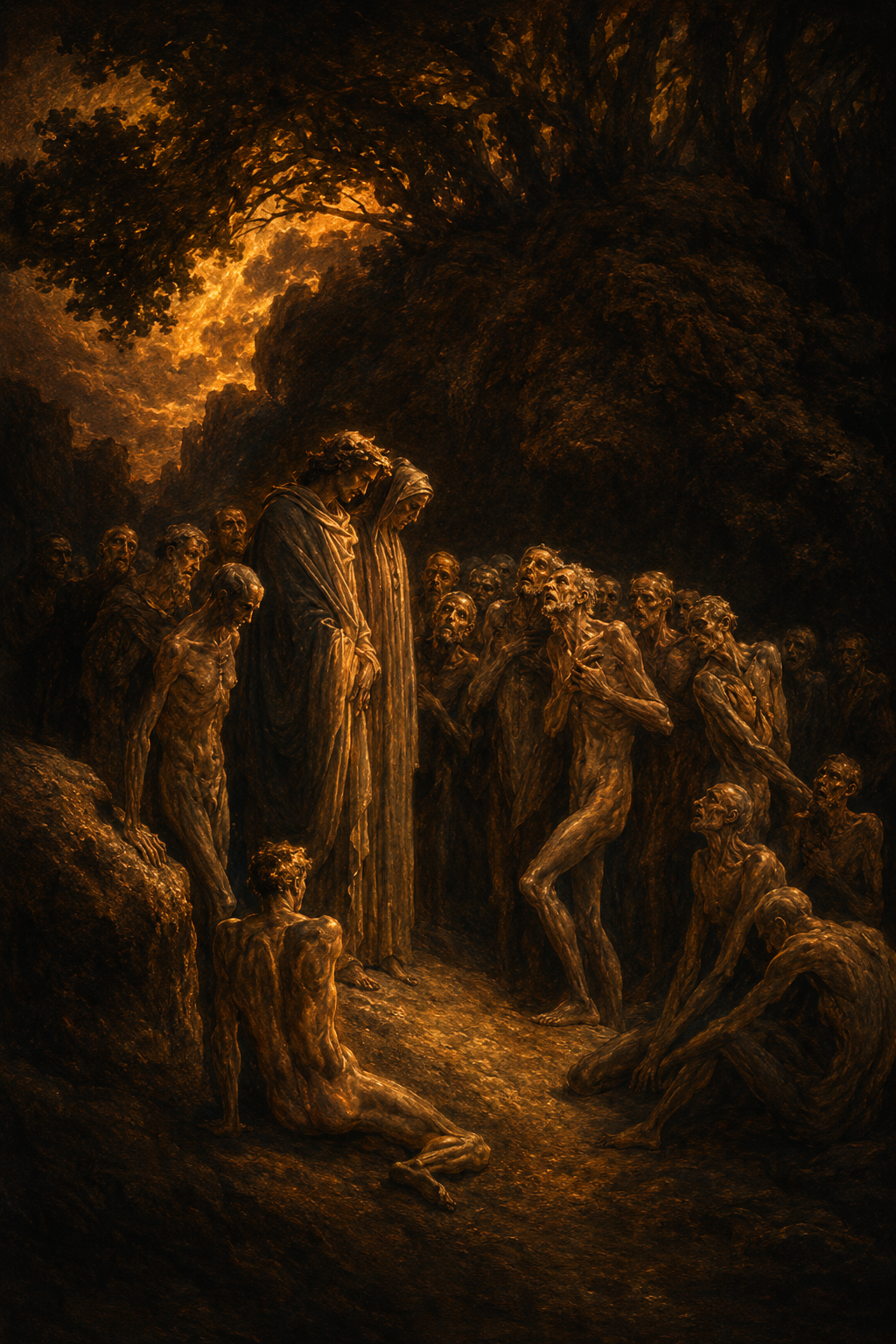
A tender custom of Catholic folk piety is still remembered in many families: after blessing oneself with holy water from the font, the faithful let a drop or two fall to the ground, or flick a drop downward, as an offering for the souls in Purgatory. It is not an official liturgical rubric, but a devotional practice handed down through generations, especially in Irish, Polish, and other European Catholic traditions. It is often accompanied by the prayer: "May the souls of the faithful departed, through the mercy of God, rest in peace. Amen."
The meaning is simple and beautiful. Holy water calls to mind baptism, blessing, cleansing, and the mercy of Christ. In this custom, the faithful do not keep the blessing only for themselves; they "share" it, as it were, with the holy souls, asking God to grant them refreshment, relief, and hastened entrance into Heaven.
"Send Lazarus, that he may dip the tip of his finger in water, to cool my tongue: for I am tormented in this flame."
Luke 16:24
This gesture recalls Our Lord's parable of Lazarus and the rich man (Luke 16:19-31). The rich man, tormented in flames, begs Abraham for even a drop of water; yet his plea goes unanswered because he is among the damned. The souls in Purgatory are different. They are not lost. They suffer purification, but they can be helped by the prayers and offerings of the living.
Many saints and theologians have taught that the purifying fire of Purgatory is comparable in intensity to the fire of Hell, differing not in heat, but in duration and in hope. The holy souls suffer with the certainty that Heaven awaits them. Thus a single drop of holy water offered for them quietly echoes and answers the rich man's plea: a small mercy the living can extend to souls who suffer, hope, and await the face of God.
Remember the holy souls daily through this simple gesture, and pray often for the faithful departed.
The offering of the Holy Mass is the most powerful suffrage that can be offered for the souls in Purgatory. The Mass is the unbloody re-presentation of the Sacrifice of Calvary — the very same Sacrifice by which Christ redeemed the world. When a Mass is offered for a deceased person, the infinite merits of Christ's Sacrifice are applied to that soul, according to the will of God and in the measure He determines.
The Council of Trent declared that the souls in Purgatory are "helped by the suffrages of the faithful, but principally by the acceptable sacrifice of the altar". St. Gregory the Great relates in his Dialogues the account of a monk whose soul appeared after death requesting that thirty consecutive Masses be offered for his release — the origin of the devotion known as "Gregorian Masses," still practised today.
The faithful may request that a Mass be offered for a particular deceased person, or for all the faithful departed, or for the "most abandoned souls" — those who have no one to pray for them. It is an act of great charity to have Masses said for the dead, and especially for those who might otherwise be forgotten.
Every prayer offered for the dead is a work of mercy. The simplest and most common prayer for the faithful departed is: "Eternal rest grant unto them, O Lord, and let perpetual light shine upon them. May they rest in peace. Amen." This short prayer, known as the Requiem aeternam, can be said at any time and in any place.
The Rosary, the Divine Office, the Stations of the Cross, and any prayer may be offered with the intention of benefiting the souls in Purgatory. Almsgiving — works of charity done for the poor and needy — can likewise be offered for the dead. Fasting and other penances may also be directed to this intention.
Even the most ordinary actions of daily life can become suffrages for the holy souls when offered with that intention: one's daily work, one's sufferings, the small inconveniences of the day. The Grace After Meals prayed in Catholic households includes the petition, "May the souls of the faithful departed through the mercy of God rest in peace" — a reminder that the care of the dead is woven into the fabric of ordinary Catholic life.
An indulgence is the remission before God of the temporal punishment due to sin, the guilt of which has already been forgiven. Indulgences may be obtained for oneself or applied to the souls of the faithful departed by way of suffrage (per modum suffragii). When we apply an indulgence to a soul in Purgatory, we do not act as the "minister" of the indulgence (as a priest acts in the Sacrament of Penance) but as an intercessor: we offer to God, through the Treasury of the Church, the satisfaction of Christ and the saints, asking Him to apply it to the departed soul. A fuller treatment of indulgences follows in Section VII below.
The Heroic Act of Charity is a voluntary offering by which a member of the faithful places all of his or her satisfactory works — all the merit of one's prayers, penances, good deeds, and indulgences, together with all the suffrages that may be offered for oneself after death — into the hands of the Blessed Virgin Mary, to be distributed by her to the souls in Purgatory according to her will.
It is called "heroic" because the person who makes this act surrenders, for the benefit of the holy souls, the entire treasury of satisfaction that would otherwise be applied to his or her own temporal punishment. It is an act of extraordinary charity toward the dead, trusting that God, who is never outdone in generosity, will provide for one's own purification.
The Heroic Act was approved and enriched with indulgences by the Holy See. It is not a vow and can be revoked at any time. Those who make it may gain a plenary indulgence, applicable only to the souls in Purgatory, under the usual conditions, on every day that they receive Holy Communion. Priests who have made the Act enjoy the privilege of a privileged altar at every Mass.
The formula is not fixed; the Act may be made simply by an interior intention, or by a short prayer such as: "O Lord, for the benefit of the holy souls in Purgatory, I place all my satisfactory works, and all the suffrages which may be offered for me after my death, into the hands of the Blessed Virgin Mary. Amen."
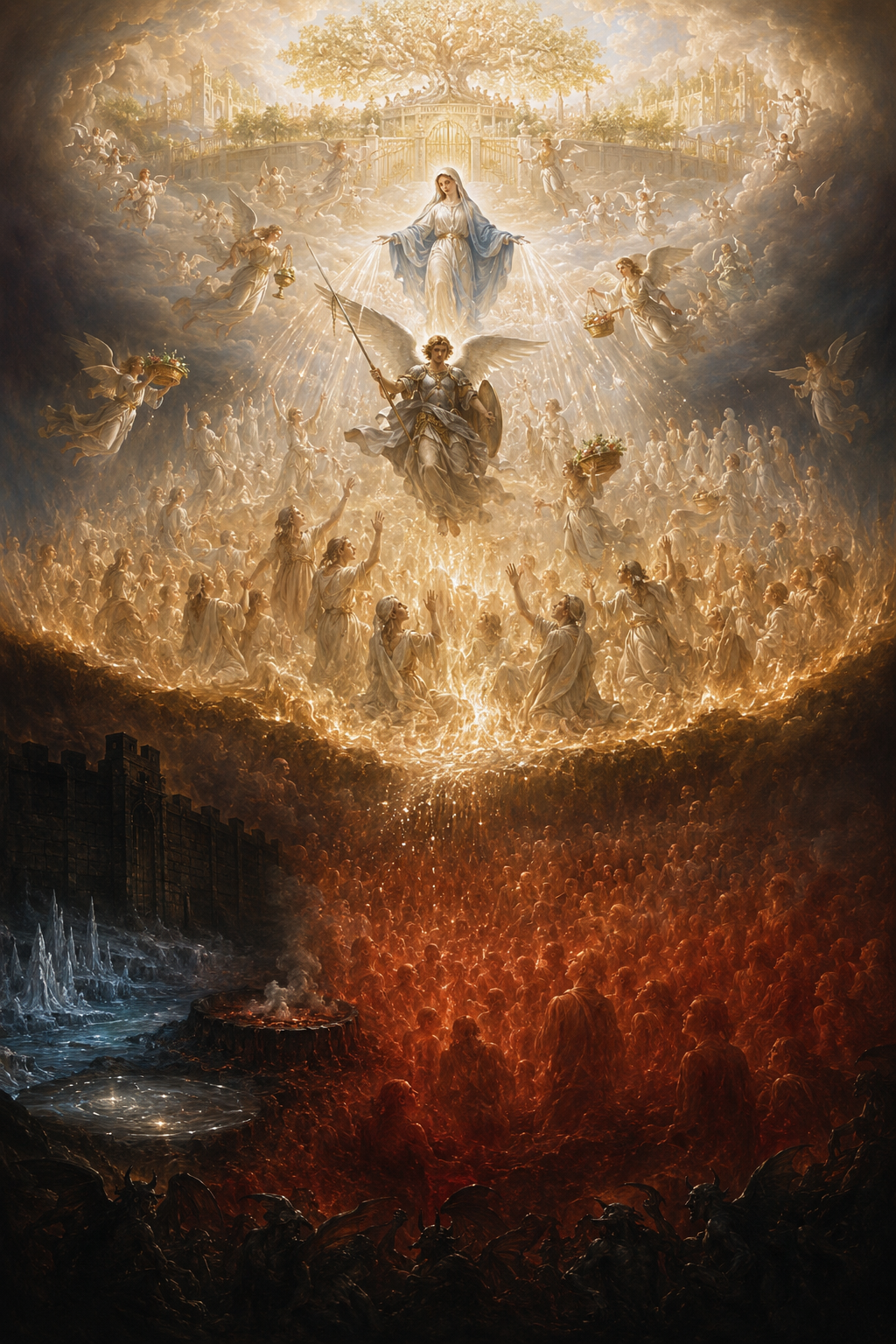
In Catholic devotional tradition, the souls in Purgatory look to the Blessed Virgin Mary as their merciful Mother. The faithful have long asked her to console them, obtain relief from their sufferings, and hasten their entrance into Heaven, trusting that her maternal charity reaches even the Church Suffering.
Mary's queenship extends over the Church Suffering as over the Church on earth and in Heaven. St. Alphonsus Liguori, in The Glories of Mary, taught that she visits, consoles, and hastens the release of the holy souls, who call her Mother because she treats them with a mother's tenderness.
Mary's mercy reaches those being purified. In revelations attributed to St. Bridget of Sweden, Mary speaks as Mother of the souls in the place of expiation, whose torments are eased by her prayers.
Carmelite tradition treasures the Sabbatine Privilege: the pious belief that Mary descends to Purgatory, especially on Saturdays, to console the souls and lead the faithful who wore the brown scapular to Heaven.
Under these titles Mary is invoked specifically for the holy souls. Confraternities of Our Lady of Suffrage exist for the express purpose of praying for those detained in Purgatory.
Mary is the guiding star for souls passing through darkness and storm toward the harbor of Heaven. St. Bernard's counsel, "look at the star, call upon Mary," applies tenderly to the holy souls, for whom she shines as a star of hope.
Named in the Litany of Loreto, the Morning Star appears at the darkest hour and heralds the dawn. So Mary images the certain hope of souls who suffer in darkness while awaiting the daybreak of Heaven.
These titles and the accounts behind them belong to Catholic devotional tradition and private revelation rather than defined dogma, yet they form a rich and continuous part of the Church's piety toward the holy souls.
Entrust the faithful departed to Mary's intercession: pray the Rosary for them, remember them under her mantle, and add with confidence, "and may Our Lady lead them home."
An indulgence is the remission before God of the temporal punishment due to sins whose guilt has already been forgiven. To understand this, one must recall the distinction made in Section I above: when a sin is forgiven (whether in the Sacrament of Penance or by an act of perfect contrition), the eternal punishment — damnation — is remitted, but a debt of temporal punishment ordinarily remains. This temporal punishment must be satisfied either in this life (through penance, suffering, and good works) or in Purgatory after death.
The Church, by virtue of the power of binding and loosing given to her by Christ (S. Matthew 16:19, 18:18), can draw upon the infinite merits of Christ and the superabundant merits of the Blessed Virgin and the saints — together called the "Treasury of the Church" — and apply them to the remission of temporal punishment for the faithful. This is what an indulgence does. It is not the forgiveness of sin itself (which requires the Sacrament of Penance or perfect contrition) but the remission of the punishment that remains after forgiveness.
Indulgences are either partial or plenary. A partial indulgence remits part of the temporal punishment due to sin. A plenary indulgence remits all of it. To gain a plenary indulgence, the faithful must perform the prescribed work, be in the state of grace, receive sacramental Communion, pray for the intentions of the Holy Father, and have complete detachment from all sin, including venial sin. If this last condition is not fully met, the indulgence is partial rather than plenary.
It is no secret that the practice of indulgences was subject to grave abuses in the later Middle Ages, and it is right to speak of them plainly.
In its origin, the practice of indulgences grew from the early Church's discipline of public penance. The bishop, as shepherd of the community, could shorten or remit the canonical penances imposed on penitents — a legitimate exercise of the power of the keys. Over the centuries, this power was extended and formalised: indulgences were attached to pilgrimages, to prayers, to acts of charity, and to almsgiving.
The trouble came when the connection between indulgences and genuine spiritual renewal was obscured, and when the offering of money came to be treated, in popular understanding and sometimes in practice, as the primary condition for obtaining an indulgence. The most notorious case was the preaching of the indulgence for the rebuilding of St. Peter's Basilica in the early sixteenth century. Certain preachers — most infamously Johann Tetzel, a Dominican friar — employed exaggerated language that suggested one could "buy" release from Purgatory for oneself or for the dead, as though the grace of God were a commodity to be purchased. The crude saying attributed to Tetzel — "As soon as the coin in the coffer rings, the soul from Purgatory springs" — captures the popular perception of the abuse.
It is important to be clear: the Church never taught that indulgences could be "sold," that money alone sufficed for an indulgence, or that sin itself could be forgiven by payment. But the line between the doctrine and the practice had become dangerously blurred. The abuses were real, the scandal was great, and the faithful were confused. It was partly these abuses that provoked Martin Luther's protest in 1517 and contributed to the fracture of Western Christendom.
The Council of Trent addressed the problem directly. In its final session, Trent affirmed the doctrine of indulgences as sound and beneficial but ordered that "all evil gains for the obtaining of them be wholly abolished" and that abuses connected with them "be amended and corrected." The Council further decreed that the practice of indulgences be reformed and that superstition, scandal, and irreverence be rooted out. In 1567, Pope St. Pius V abolished the granting of indulgences in exchange for any financial payment whatsoever.
The reforms continued in the twentieth century. In 1968, Pope Paul VI issued the apostolic constitution Indulgentiarum Doctrina, which thoroughly revised the norms governing indulgences, eliminated the old system of counting indulgences in "days" and "years" (which had caused much misunderstanding), and clarified the theology of indulgences for the modern faithful. Today, the Enchiridion Indulgentiarum (Manual of Indulgences), published by the Apostolic Penitentiary, provides the authoritative list of indulgenced works and the conditions for gaining them.
The doctrine of indulgences is neither a medieval invention nor a discarded relic. It is a living part of the Church's pastoral care, rooted in the power of the keys, the Treasury of the merits of Christ and the saints, and the Communion of Saints. The abuses of the past were abuses of a genuine doctrine — and they were corrected by the Church herself.
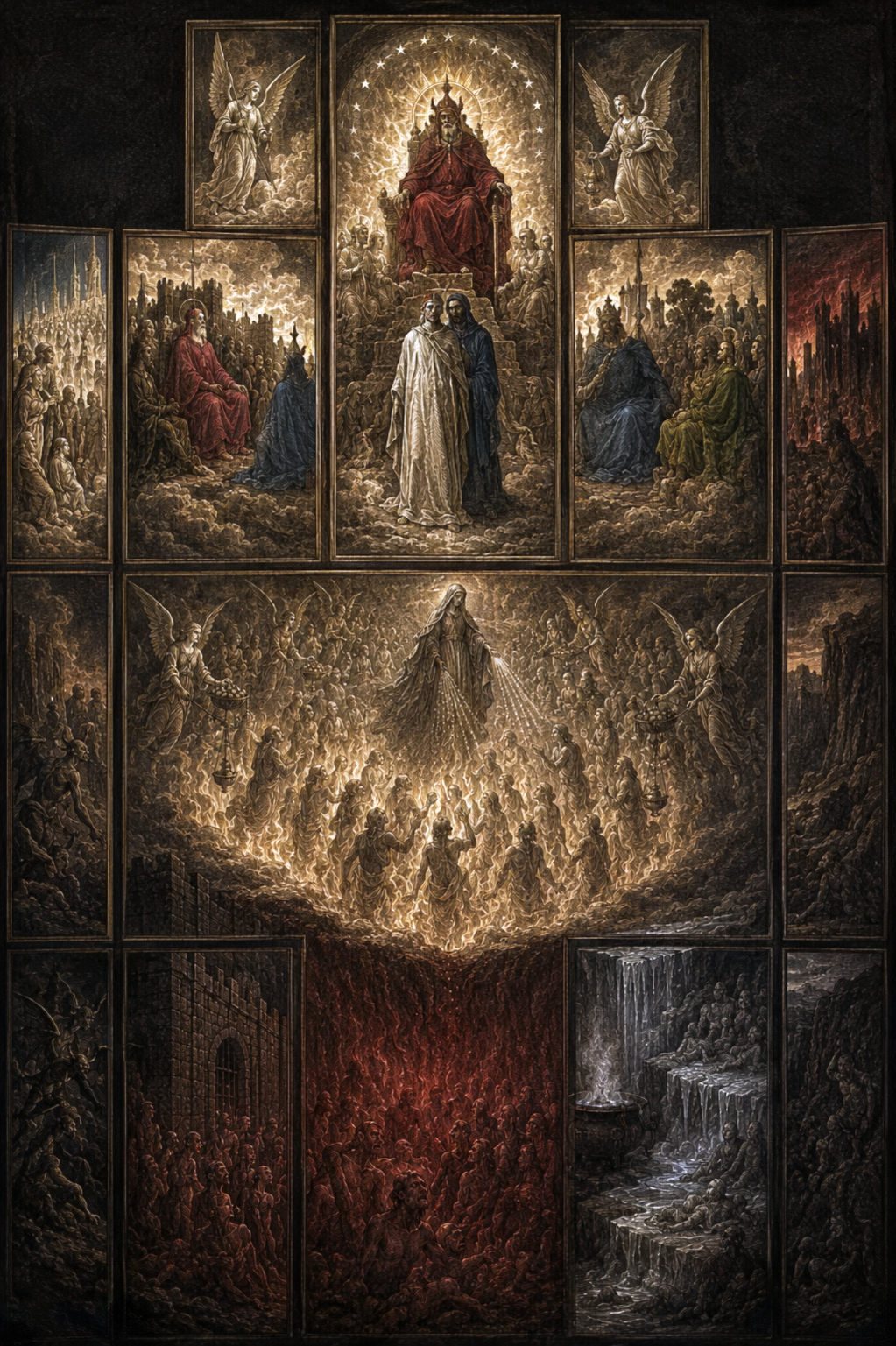
Beyond the defined teaching of the Church, many saints and mystics have received private revelations concerning the state of the holy souls in Purgatory. These revelations are not binding on the faithful, but they have been received with respect by the Church and have nourished the devotion of the faithful across the centuries.
St. Catherine of Genoa (1447–1510)
The most celebrated mystical account of Purgatory is the Treatise on Purgatory (Trattato del Purgatorio) by St. Catherine of Genoa, a laywoman who experienced profound mystical states during her lifetime. Her Treatise is remarkable for its emphasis not on the sufferings of Purgatory but on the joy and love that pervade it. According to St. Catherine, the souls in Purgatory suffer intensely — but their suffering is borne willingly and even joyfully, because they understand that the fire is purifying them for the vision of God. They would not wish to be elsewhere, for they see that the fire is an expression of God's love.
She writes that the soul in Purgatory has a "happiness that increases day by day" as the rust of sin is burned away, and that "no peace is comparable to that of the souls in Purgatory except that of the saints in Heaven." At the same time, the pain is real and intense, because the soul perceives how its own impurities have separated it from God, whom it now loves with an ardour beyond anything it felt in life. The Treatise has been praised by theologians and popes and remains one of the most widely read works of Catholic mysticism.
St. Padre Pio (1887–1968)
The stigmatist Capuchin friar St. Padre Pio of Pietrelcina spoke frequently of the holy souls in Purgatory and was known to have been visited by them. He said: "More souls of the dead from Purgatory than living people climb this mountain to attend my Masses and seek my prayers." He urged the faithful never to neglect prayer for the departed, especially the offering of the Holy Mass.
St. Faustina Kowalska (1905–1938)
The apostle of Divine Mercy recorded in her Diary several visions of Purgatory. She describes being led by her guardian angel to "a misty place full of fire" where she saw the souls suffering greatly, praying fervently, and unable to help themselves. She writes: "I asked these souls what their greatest suffering was. They answered me in one voice that their greatest torment is longing for God". She also describes seeing souls released from Purgatory on the Feast of All Souls through the prayers and Masses of the faithful.
St. Thomas More (1478–1535)
The great English martyr, writing in his Supplication of Souls (1529), gives voice to the holy souls themselves, pleading with the living not to forget them: "If ye pity the blind, there is none so blind as we, who are here in the dark, except for the light of faith, which yet we have, and nothing else... Remember what kin ye and we be together... Pity must your heart needs compel you to remember us." This work was composed in defence of the doctrine of Purgatory against the attacks of the English reformers.
Blessed Anne Catherine Emmerich (1774–1824)
The Augustinian mystic and stigmatist was shown visions of Purgatory in which she saw the immense variety of sufferings experienced by different souls according to their sins and the degree of purification needed. She also witnessed the tremendous relief brought to the souls by the prayers of the faithful and above all by the Holy Sacrifice of the Mass.
Private revelations concerning Purgatory, however edifying, do not belong to the deposit of faith. They may be believed with human faith where the Church has approved the integrity of the visionary, but no Catholic is obliged to accept them. The defined doctrine — that Purgatory exists, that its sufferings are real, and that the suffrages of the living are efficacious — stands on the authority of Scripture, Tradition, and the Magisterium, not on private revelation.
The month of November is dedicated by the Church to prayer for the faithful departed. This devotion, though practised informally for centuries, was given formal liturgical expression through the feasts of All Saints (November 1) and All Souls (November 2), and through the customs and indulgences attached to the entire month.
All Saints' Day (November 1)
The Solemnity of All Saints, a holy day of obligation, honours all the blessed in Heaven — both the canonised saints and the innumerable unknown faithful who have attained the Beatific Vision. It is a feast of the Church Triumphant, a celebration of the final goal to which all Christians are called.
All Souls' Day (November 2) — The Commemoration of All the Faithful Departed
The very next day, the Church turns her attention from the blessed in Heaven to the suffering souls in Purgatory. All Souls' Day, instituted by St. Odilo, Abbot of Cluny, in 998 and gradually adopted throughout the Western Church, is devoted entirely to prayer for the dead. Every priest is permitted to celebrate three Masses on this day (a privilege otherwise reserved for Christmas), and the faithful are urged to offer prayers, Communion, and indulgences for the departed.
The juxtaposition of the two feasts — All Saints and All Souls — is a beautiful expression of the Church's faith in the Communion of Saints. On November 1, we celebrate those who have reached the goal; on November 2, we pray for those who are still on the way.
The November Indulgence for Visiting a Cemetery
From November 1 through November 8, a plenary indulgence, applicable only to the souls in Purgatory, may be gained once per day by visiting a cemetery and praying, even if only mentally, for the departed. The usual conditions apply: sacramental confession (within about twenty days), Holy Communion, prayer for the intentions of the Holy Father, and detachment from all sin. From November 9 through November 30, the same visit may be made for a partial indulgence.
Customs and Practices
Throughout November, many parishes offer special devotions for the dead: the Office of the Dead, the Rosary for the faithful departed, the "Month's Mind" Mass on the thirtieth day after a death, and the practice of writing the names of the deceased in a "Book of the Dead" placed near the altar. Many families visit the graves of their loved ones, adorn them with flowers and candles, and pray the De Profundis (Psalm 129 / 130): "Out of the depths I have cried to thee, O Lord; Lord, hear my voice."
These customs, both liturgical and popular, testify to the Church's maternal solicitude for her children beyond the grave. The November devotions are not a morbid preoccupation with death but an act of faith in the resurrection, an exercise of charity toward the suffering, and an expression of hope that one day we shall be reunited with those we have loved in the eternal life of God.
Devotion to the holy souls need not be complicated. The Church gives the faithful simple means by which charity for the dead can become part of ordinary Catholic life: the Mass, the Rosary, short prayers, sacrifices, cemetery visits, indulgenced works, and the offering of daily duties. What matters most is fidelity. A single prayer said daily for the dead, persevered in for years, is better than a great intention quickly forgotten.
Daily
Weekly
Monthly and Yearly
Short Prayers for the Dead
"May the souls of the faithful departed, through the mercy of God, rest in peace. Amen."
"Out of the depths I have cried to thee, O Lord: Lord, hear my voice." — Psalm 129 / 130
"Sweet Heart of Mary, be my salvation." This brief aspiration is often offered for the dying and the departed, entrusting them to the maternal intercession of Our Lady.
The point of such a rule is not anxiety, calculation, or spiritual bookkeeping. It is love. The holy souls are our brothers and sisters in Christ. They cannot merit for themselves, but they can be aided by us; and when they enter Heaven, the charity shown to them is not forgotten before God.
No. Purgatory is not an opportunity for repentance after death. Those who enter Purgatory have already died in the state of grace — they are saved. They will certainly reach Heaven. The soul's fundamental choice for or against God is made in this life and is irrevocable at the moment of death. Purgatory is the purification of those who are already saved but not yet perfectly clean.
The Church has not defined whether Purgatory involves duration in the way we experience time on earth. The councils speak of purification and suffering, not of calendars and clocks. Many theologians have speculated about the duration of purgatorial suffering, and the tradition of offering Masses on the third, seventh, and thirtieth day after death (as well as the annual anniversary) reflects the intuition that the process has some temporal character. What is certain is that Purgatory is not eternal — every soul in Purgatory will eventually be admitted to the Beatific Vision, and at the latest, Purgatory will end at the General Judgement.
Yes. The Church teaches that the souls in Purgatory undergo real suffering. The nature of this suffering is debated among theologians. The Western tradition has generally spoken of a purifying fire; the Eastern tradition has often preferred to speak of a process of maturation and growth. The defined doctrine requires belief in the reality of purgatorial purification and its attendant suffering, but does not mandate a particular theory about the nature of the fire. What all agree on is that the greatest suffering of the holy souls is the pain of separation from God — the aching desire to see Him face to face, delayed by the stain of imperfection that still clings to the soul.
No. The soul in Purgatory is confirmed in grace. It can no longer sin, and it is absolutely certain of its salvation. The only question is when — not whether — it will enter into the glory of Heaven. This is the definitive teaching of the Church, expressed in all three conciliar definitions: the souls in Purgatory are those who died "in the grace and friendship of God".
The Church has not defined whether Purgatory is a "place" in the spatial sense. The defined doctrine speaks of a "state" of purification rather than a geographical location. Many of the Fathers and Doctors spoke of Purgatory in spatial terms, but this may be understood as accommodation to human modes of thought. What is essential is that Purgatory is a real condition of the soul after death, not a metaphor or a state of mind.
This is not a matter of defined doctrine, but the common opinion of theologians and the consistent witness of the mystics is that yes, the holy souls are aware, at least in some manner, of the prayers and Masses offered for them, and that they are consoled and relieved by them. Many saints report that the holy souls expressed gratitude for the suffrages of the living. Whether this knowledge is direct or mediated through the angels is debated.
The common teaching, though not solemnly defined, is that the holy souls can and do pray for the living, especially for those who have aided them. St. Robert Bellarmine, the great Doctor of the Church, defended this position. The practice of invoking the "holy souls in Purgatory" is widespread in Catholic piety and has never been condemned by the Church. St. Alphonsus Liguori encouraged the faithful to invoke the holy souls as powerful intercessors.
The Protestant Reformers rejected Purgatory for several reasons: they held that justification is by faith alone and that the merits of Christ's Sacrifice are applied fully and immediately to the believer, leaving no room for temporal punishment after death; they rejected the deuterocanonical books (including 2 Maccabees) as non-canonical; and they were reacting, understandably, against the severe abuses connected with indulgences. The Catholic Church maintains that the doctrine is founded on Scripture (rightly understood), on the unbroken Tradition of the Fathers, and on the solemn definitions of three ecumenical councils — and that the correction of abuses does not invalidate the doctrine that was abused.
Pray for them. The simplest and most effective things you can do:
The doctrine set forth above is drawn from Sacred Scripture (Douay-Rheims translation), Sacred Tradition, and the teaching authority of the Church. This page is offered as a catechetical resource for the faithful, not as a work of original theology.
Sources
Sacred Scripture (Douay-Rheims)
2 Maccabees 12:43–46 — Prayer and sacrifice for the dead.
1 Corinthians 3:11–15 — Saved "yet so as by fire."
S. Matthew 12:32 — Forgiveness "in the world to come."
S. Matthew 5:26 — "Till thou repay the last farthing."
Apocalypse 21:27 — Nothing defiled shall enter Heaven.
Ecclesiasticus 2:5 — Tried in the furnace of humiliation.
Ecumenical Councils
Second Council of Lyons, Profession of Faith of Michael VIII Palaeologus.
Council of Florence, Decree for the Greeks (Laetentur Caeli).
Council of Trent, Decree Concerning Purgatory.
Council of Trent, Decree on the Canon of Sacred Scripture.
Council of Trent, Decree on Justification.
Catechism of the Catholic Church
Purgatory.
Indulgences.
Temporal punishment due to sin.
The Communion of Saints.
Death and the irrevocability of the soul's state.
Hell (for contrast with Purgatory).
Papal and Magisterial Documents
Pope Paul VI, Indulgentiarum Doctrina (1968) — Apostolic Constitution revising the norms on indulgences.
Pope Benedict XII, Benedictus Deus (1336) — On the Beatific Vision and the state of the dead.
Enchiridion Indulgentiarum (Manual of Indulgences), Apostolic Penitentiary — Current norms for indulgences.
Fathers and Doctors of the Church
Tertullian, De Monogamia (c. 213) and De Corona (c. 211) — On oblations and prayers for the dead.
St. Cyril of Jerusalem, Catechetical Lectures, Mystagogic Lecture V (c. 350).
St. Augustine, Enchiridion, ch. 69; City of God, Book XXI, ch. 24; Confessions, Book IX.
St. Gregory the Great, Dialogues, Book IV (c. 593).
St. John Chrysostom, Homilies on 1 Corinthians, Homily XLI.
St. Robert Bellarmine, De Purgatorio (from Disputationes de Controversiis).
St. Alphonsus Liguori, The Great Means of Salvation and of Perfection.
Mystical and Devotional Works
St. Catherine of Genoa, Treatise on Purgatory (Trattato del Purgatorio), c. 1510.
St. Thomas More, The Supplication of Souls (1529).
St. Faustina Kowalska, Diary: Divine Mercy in My Soul.
Reference
Denzinger-Schönmetzer, Enchiridion Symbolorum.
Douay-Rheims Bible (1899 Challoner revision).
Related Reading
The Last Things — death, judgement, heaven, and hell.
The Assumption of Mary — the glorified body and the hope promised to the faithful.
Examination of Conscience — preparation for the Sacrament of Penance, by which temporal punishment is remitted.
Collected for the faithful of The Layman's Lantern.
Drawn from Sacred Scripture, Sacred Tradition, and the teaching authority of the Church.